The ReaderBound team was at IBPA’s Publishing University in Portland recently. They don’t call it PubU for nothing, and you’re bound to come away with some important insights after a couple of days of huddling with colleagues.
Here is a quick recap of some of our big takeaways from this year.
1. Amazon sales are trending down for many presses
Amazon accounts for more than half of book sales in the United States and so this one really jumped out: Amazon sales are trending down for many publishers this year. This will obviously vary from press to press but by some estimates sales through this key channel were softening on the order of 10-15% for many.
There are a number of factors behind this trend but one of the key contributors is a pattern of tightening inventory controls as Amazon aims to reduce the value of book inventories carried on its balance sheet and increase inventory turns. What this means to the individual press is that initial orders and re-orders and trending to smaller numbers than in the past, and that individual ISBNs can more easily (and frequently) go out of stock, resulting in lost sales.
2. The business case for direct-to-consumer sales is getting even stronger
We see this every day in terms of direct sales performance by ReaderBound client presses, but we certainly found some compelling examples of direct-to-consumer sales success at PubU as well. One standout was Octane Press, who shared that, over the last five years nearly 40% of their sales were D2C.
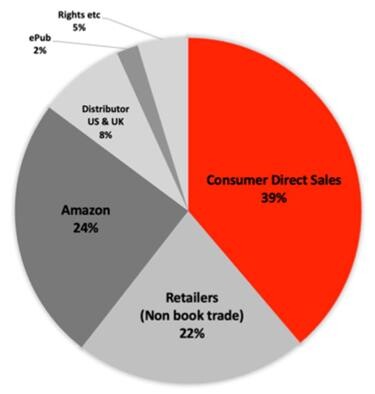
Publisher Lee Klancher explained that the press sees D2C not only as their leading sales channel, but also as way to build reader engagement and community around the Octane publishing program. That direct connection is worth a lot more than just the sale the press makes to the reader today. It also opens up channels for direct feedback from buyers, and, because the press owns that reader relationship, for continuing sales over time.
Octane is a great example of a press with a carefully defined niche that has really committed to that D2C channel across its sales and marketing effort.
3. The margin gap is huge
It has always been true that publishers keep a greater share of the list price for any units sold direct to consumer. But, owing in part to increasing margin pressures on sales through major retailers, the gap on D2C sales is getting even bigger these days.
The following chart, also provided by Octane Press, makes the point clearly by reporting out the gross margin to the publisher on five-year sales of a $40.00 HC edition, after PPB costs, author royalty, fulfillment costs, standard trade discounts (if applicable), a 25% discount off list on D2C sales, and credit card processing on those direct sales.
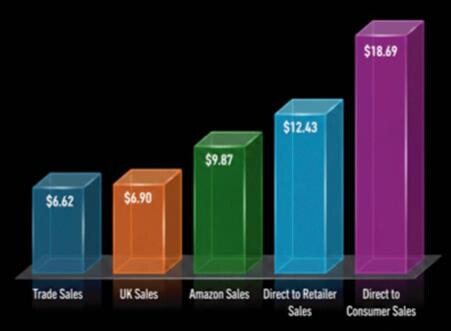
In other words, the per unit gross margin to the press on a direct sale copy was roughly three times that of trade sales, and nearly twice the contribution on units sold via Amazon, even after a standing 25%-off-list discount on the publisher’s website. That’s an important takeaway to say the least in that it demonstrates how the D2C channel preserves that higher margin per unit while leaving the publisher with full control on pricing decisions and other special offers or incentives to readers.
There are some basics there that we all know in terms of the some of the key advantages that accrue to publishers that are selling directly. But a concrete example if always compelling and so we especially want to thank Lee at Octane for being so generous in sharing his considerable experience with D2C.
Going to AUPresses in Seattle? We are too! Get in touch if you would like to learn more about how to use your metadata to drive discoverability and direct sales.