Every time a new snapshot of industry sales comes out, you can see how various formats are trending in relation to one another. For example, year-to-date figures from the Association of American Publishers tell us that trade sales in the US were down -4.1% through the first seven months of the year. But they also show that format performance varied widely within that overall trend.
Hardcover revenues, for instance, were down -0.6% through July, but paperback sales declined more sharply (by -9.1%). Ebook sales edged up by 1.5%, with digital audio also showing a slight gain through July (0.6%).
One takeaway from that summary is that matching the right format with the right customer at the right time can be an important sales driver.
This is of course not a new idea. I remember visiting Powell's Books in Portland, Oregon years ago and being surprised to see they were shelving new books alongside used editions of the same title. I came to learn that this was once a somewhat controversial thing to do but that Powell's persisted—rightly it turns out—on the premise that giving readers more chances to find the right edition for them was an important strategy for driving sales.
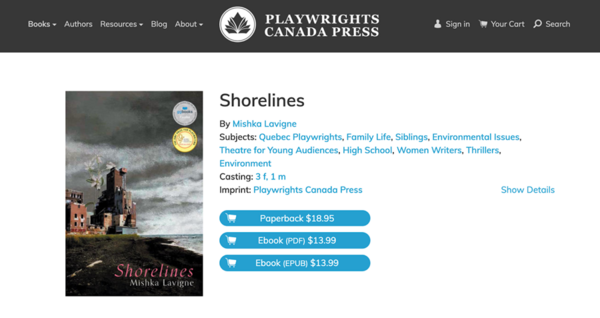
We have taken this lesson to heart at ReaderBound with a commitment to consolidate all available editions of a book on a single unified title listing. Each edition gets its own purchase button, pricing, edition details, and in stock indication. The reader can choose the one that suits them best, and never has to search around the site to find an EPUB edition of a book they are interested in while looking at a hardcover listing, or vice versa.
This may seem like a small decision, but the sales performance of our clients—before and after launching a new site, that is—makes it clear that making it easy for readers to choose the edition that suits them best can really make a difference on sales.