Most publishers in Canada and the US rely on BISG's BISAC scheme for book classification. However, many also find BISAC limiting in terms of its ability to provide additional nuance or more specialized categorization for their lists. Some presses turn to custom subject schemes as an alternative, but there is another option hiding in plain sight: Thema. Thema is an international, multi-lingual book subject classification scheme developed by EDItEUR. It is not a replacement for BISAC, but rather an additional scheme to be used alongside it. Of particular interest to publishers in Canada and the US is that Thema is meant to be used across all book supply chains, both domestic and international. In that sense, it is an important additional opportunity for a publisher to take ownership over how its books are classified in the marketplace.
The BISAC subject scheme (Book Industry Standards and Communications) is routinely used by publishers in Canada and the United States. Aside from the fact that its usage is largely limited to North America, it is a book classification scheme that is also primarily oriented to bookstores — that is, its main function is to classify books in such a way to provide guidance to booksellers about how and where to handle those books within their stores.
This is a very valuable contribution indeed and there is every reason to expect that BISAC will continue to play an important role in North America going forward. It’s true as well though that many presses find the schema limiting in terms of its ability to provide additional nuance or more specialized categorization for their lists. We see this at ReaderBound, for example, where many of our client presses opt to use a custom schema to classify their books on their own websites. Those publishers are drawn to custom subject schemes because they allow them to categorize books in ways that are more meaningful for their lists. For example, to include very specific geographic references (e.g., books set in Montana or Wyoming) or to reflect more in-depth specializations within categories (e.g., Asian-Canadian Playwrights).
There is however another option available to all publishers — Thema — and it is in some respects hiding in plain sight. Thema is an international, multi-lingual book subject classification scheme developed by EDItEUR. It is not a replacement for BISAC, but rather an additional scheme to be used alongside it. Of particular interest to publishers in Canada and the US is that Thema is meant to be used across all book supply chains, both domestic and international. In that sense, it is an important additional opportunity for a publisher to take ownership over how its books are classified in the marketplace.
Thema is a very rich and detailed classification scheme, encompassing 3,000 core subject classifications over 20 top-level categories (e.g., Biography, Fiction, History, etc.), and supported by six broad types of subject qualifiers (e.g., language qualifiers, place qualifiers, interest qualifiers, etc.). Those qualifier codes include a large set of shared qualifiers, such as interest qualifiers that include age and grade-level indicators, along with thousands of national extension qualifiers that are specific to a given market (e.g., place or language qualifiers that are specific to the Canadian or American markets).
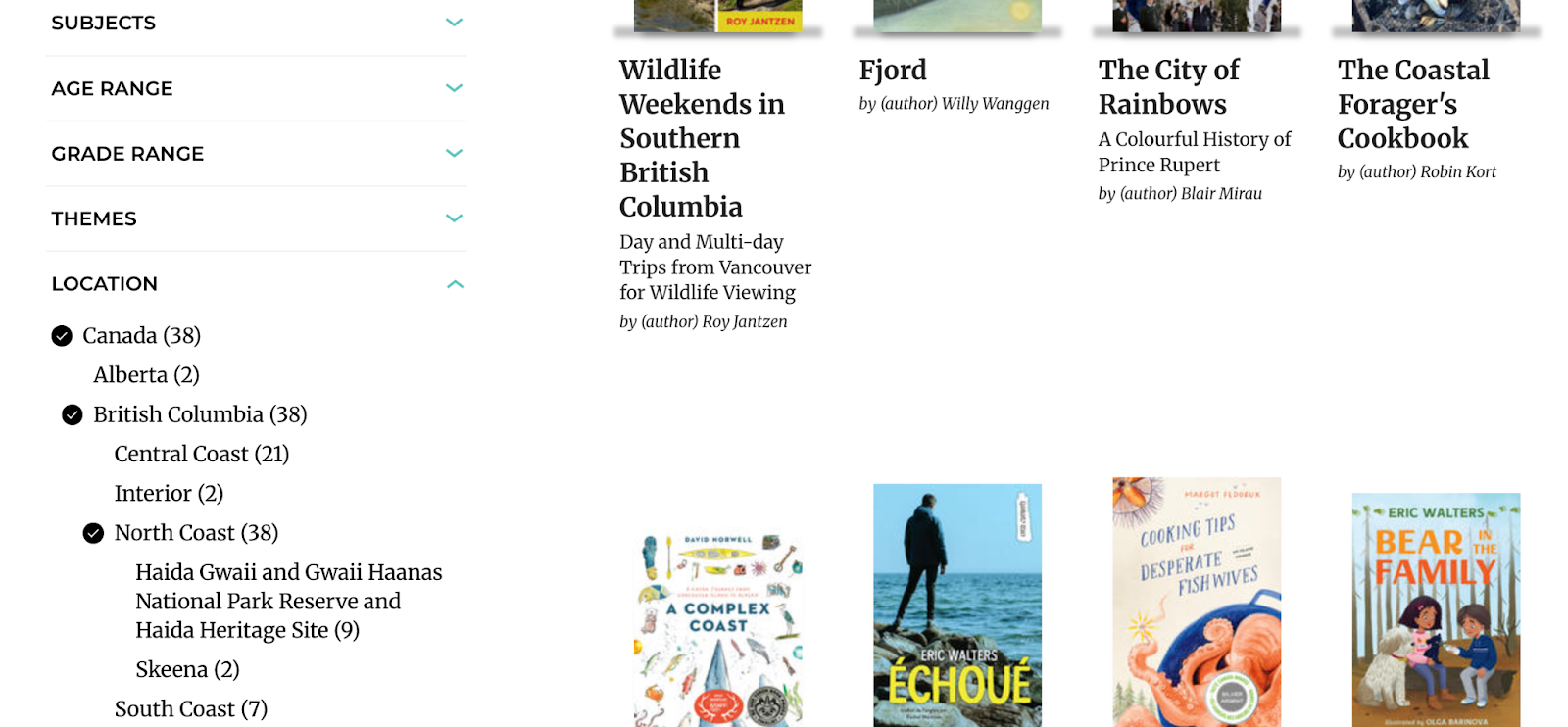
Using place qualifiers in Thema to set very specific location references within the list.
It is very easy to get a feel for the structure and classification options in Thema by exploring the entire set of classifications and qualifiers in a browser-based version provided by EDItEUR.
What this means in practice is that a publisher can combine various Thema codes to achieve more specific categorizations of a book, and to add additional meaning to that classification process. The following example, which is drawn from a recent EDItEUR webinar, demonstrates how a more general classification from the BISAC scheme can become something more nuanced and specific through Thema.
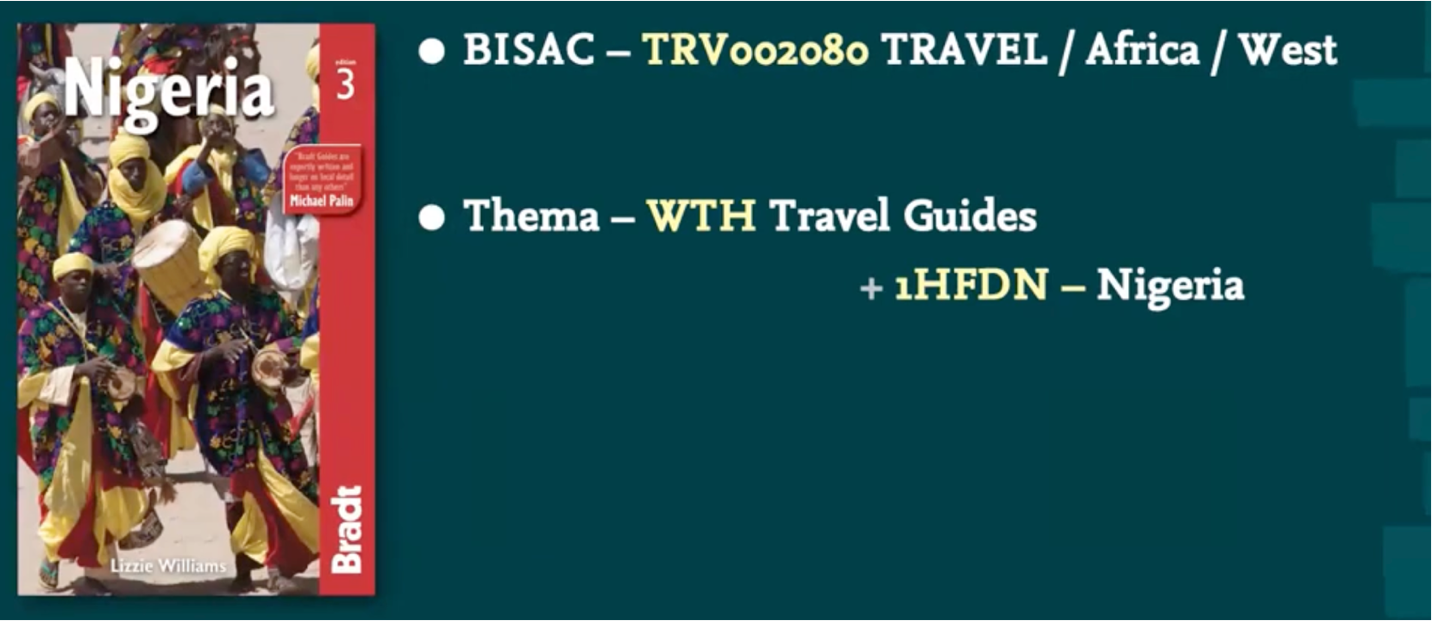
Classifying the same work with BISAC and Thema. Source: EDItEUR
That is a simple example, but you can imagine right away how that more specific classification might really play a part in boosting discovery for a Nigerian travel guide, both in bricks-and-mortar stores and in online retail as well. You can also see the difference between the pre-determined structure of BISAC (where all of the codes are established in advance and have to be fitted to the book) and the Thema structure, where the press can combine multiple codes to convey additional meaning and accomplish more complex classifications.
The other notable thing about Thema, and something that makes it especially valuable in export markets, is that the entire scheme has already been translated into 25 different languages which are in use in more than 50 countries.
The codes are language-independent, which means you use the same code values across all markets and the classifications will be faithfully rendered for each official translation.
You can see this feature reflected in the following illustration from EDItEUR, where we see the same Thema codes being used to describe a work in its original language of publication (Japanese), and then in translation in English and Spanish.
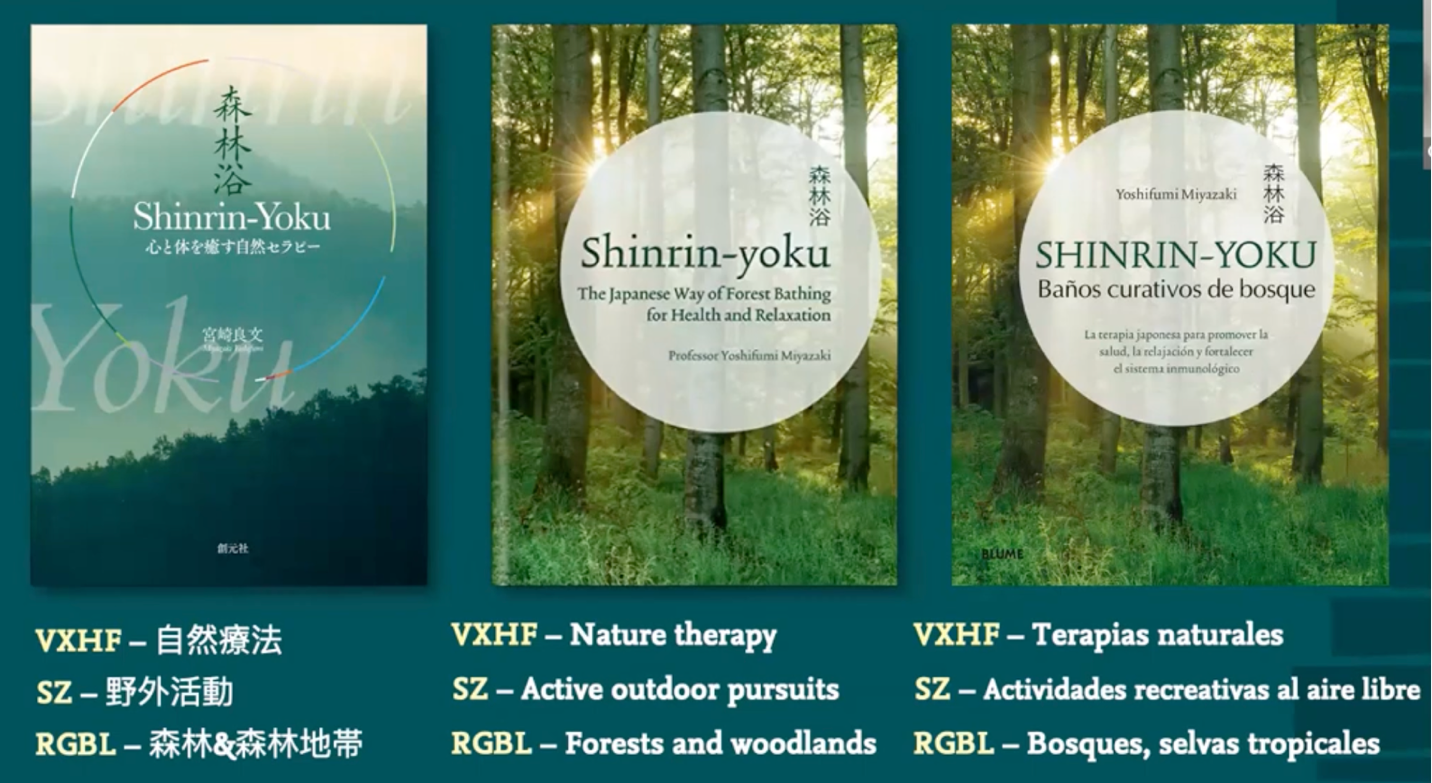
The same Thema codes can be used to classify a work across 25 official language translations of the entire classification scheme. Source: EDItEUR
The applications of this type of classification scheme are pretty obvious. The more specific categorizations Thema allows for can boost discoverability in online channels — a significant feature in itself given the very large proportion of book discovery that now happens online. But as a global scheme with multiple language translations, Thema can also help your books travel better and more efficiently across export markets and global supply chains. The examples we have shown here are very simple but you can apply as much detail (and as many Thema codes) as you like in order to make each book easier for readers to find.
For more on Thema, and for detailed guidance on its use, please visit the EDItEUR website.